

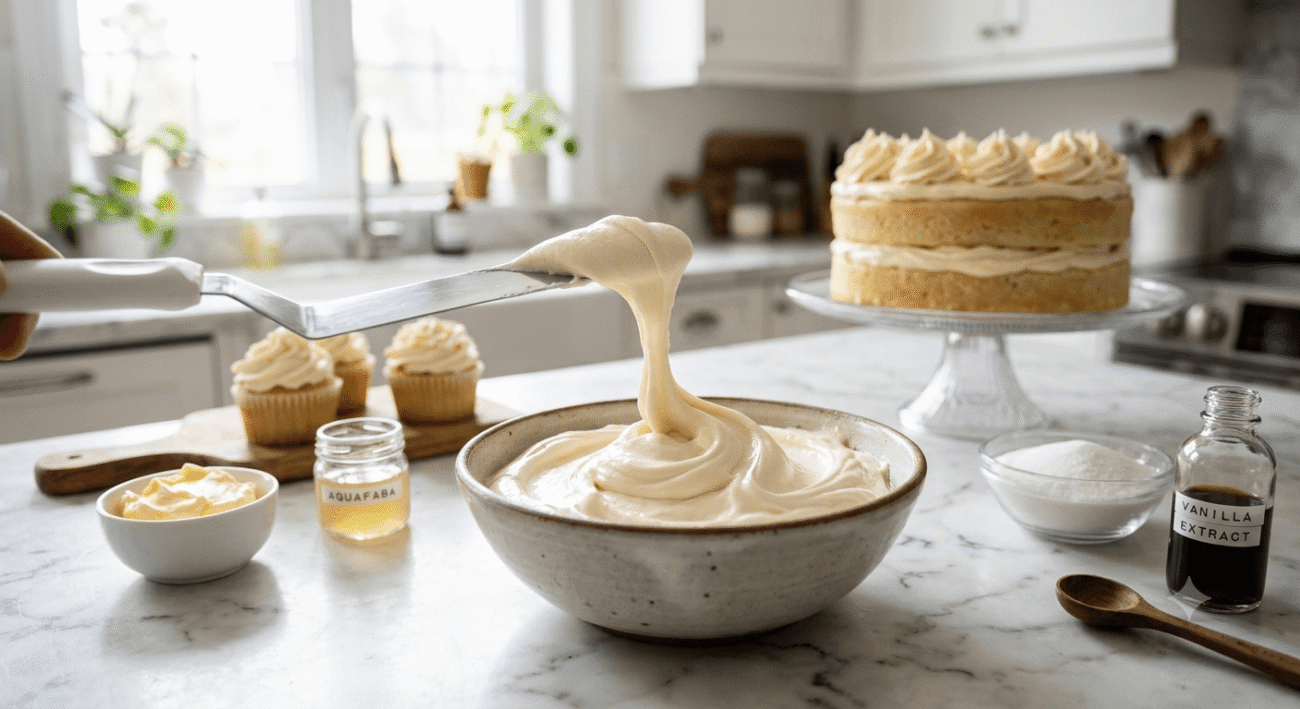
Swiss meringue buttercream is famous for its silky texture and less-sweet taste. The traditional recipe uses egg whites, but if you don’t eat eggs or simply want an egg-free version, you can still make a delicious buttercream at home.
This eggless Swiss meringue buttercream is light, smooth, and creamy. It pipes beautifully on cakes and cupcakes and is perfect for birthdays, weddings, and special occasions. The recipe uses simple ingredients and is easy enough for beginners.
Unlike regular buttercream, this frosting has a soft, fluffy texture that spreads easily and doesn’t taste overly sweet.
Whether you’re decorating a cake or filling macarons, this recipe will help you create a professional-looking finish without using eggs.
Why You’ll Love This Eggless Swiss Meringue Buttercream
There are many frosting recipes, but this one is special because it gives you the smooth, silky texture of classic Swiss meringue buttercream without using eggs. It’s simple to make and tastes much lighter than traditional American buttercream.
Here are a few reasons why you’ll love this recipe:
- Smooth, silky, and creamy texture.
- Completely egg-free and beginner-friendly.
- Less sweet than traditional buttercream.
- Perfect for frosting cakes, cupcakes, and cookies.
- Pipes beautiful swirls and decorative borders.
- Made with simple ingredients.
- Easy to flavor with chocolate, coffee, fruit, or extracts.
- Holds its shape well for cake decorating.
- Great for birthdays, weddings, and celebrations.
- Can be made ahead and stored for later use.
Whether you’re baking your first cake or decorating a special dessert, this eggless buttercream is a reliable frosting you’ll want to make again and again.
Equipment You’ll Need
You don’t need any special bakery equipment. Most of these tools are already in a home kitchen.
- Large mixing bowl
- Heatproof bowl
- Electric hand mixer or stand mixer
- Rubber spatula
- Measuring cups
- Measuring spoons
- Kitchen thermometer (optional but helpful)
- Fine mesh sieve (if needed)
- Piping bags and decorating tips (optional)
Helpful Tip: A stand mixer makes the process easier because the frosting needs several minutes of whipping to become light and fluffy. However, an electric hand mixer works just as well if you’re patient.
Ingredients
Gather all of your ingredients before you begin. Using room-temperature ingredients helps create a smooth, fluffy buttercream without lumps.
- 1 cup (225g) unsalted butter, softened
- 1 cup (200g) granulated sugar
- ¼ cup (60ml) aquafaba (the liquid from a can of chickpeas)
- 1 teaspoon vanilla extract
- ¼ teaspoon cream of tartar (optional, but helps stabilize the aquafaba)
- A pinch of salt
Optional Flavor Add-Ins
- ½ cup melted and cooled dark or milk chocolate
- 2 tablespoons cocoa powder
- 1 teaspoon instant coffee dissolved in 1 teaspoon hot water
- 2 tablespoons fruit puree (strawberry, raspberry, or mango)
- 1 teaspoon almond, lemon, peppermint, or coconut extract
- Food coloring (gel colors work best)
Ingredient Notes
Aquafaba
Aquafaba is the liquid found in canned chickpeas. It whips up much like egg whites, making it the perfect egg-free substitute for Swiss meringue buttercream.
For the best results, use unsalted canned chickpeas. If the liquid seems thin, simmer it for a few minutes until it reduces slightly, then let it cool completely before using.
Butter
Use unsalted butter that is soft but not melted. Soft butter blends easily with the whipped aquafaba mixture and creates a smooth, creamy frosting.
If the butter is too cold, the frosting may look curdled. If it’s too warm, the buttercream can become runny.
Sugar
Regular granulated sugar works well because it dissolves while being heated with the aquafaba. Once dissolved, the buttercream will have a silky texture without a grainy feel.
Vanilla Extract
A good-quality vanilla extract adds a rich, classic flavor. You can easily swap it for other extracts depending on the flavor you’re making.
Cream of Tartar
This ingredient is optional but recommended. It helps stabilize the whipped aquafaba, making the buttercream lighter and more stable.
Salt
A small pinch of salt balances the sweetness and enhances the overall flavor.
With your ingredients measured and ready, you’re all set to make a smooth, fluffy eggless Swiss meringue buttercream from scratch. In the next section, we’ll walk through each step so you can achieve perfect results every time.
Step-by-Step Instructions
Making eggless Swiss meringue buttercream is easier than it sounds. Just follow each step carefully, and you’ll end up with a smooth, fluffy frosting that’s perfect for decorating cakes and cupcakes.
Step 1: Prepare the Double Boiler
Fill a small saucepan with about 1 to 2 inches of water and bring it to a gentle simmer.
Place a heatproof bowl over the saucepan. Make sure the bottom of the bowl doesn’t touch the water.
This gentle heat helps dissolve the sugar without overheating the aquafaba.
Step 2: Heat the Aquafaba and Sugar
Add the following to the heatproof bowl:
- Aquafaba
- Granulated sugar
- Cream of tartar (if using)
Whisk constantly for 4 to 6 minutes until:
- The sugar is completely dissolved.
- The mixture feels smooth when rubbed between your fingers.
- The mixture is warm but not boiling.
Tip: If you have a kitchen thermometer, the mixture should reach about 160°F (71°C).
Step 3: Whip the Mixture
Remove the bowl from the heat.
Using a stand mixer or an electric hand mixer, beat the warm mixture on high speed for 8 to 10 minutes.
You’ll notice the mixture change from foamy to thick, glossy, and fluffy.
It’s ready when:
- Stiff peaks form.
- The outside of the bowl feels cool.
- The mixture holds its shape.
Be patient during this step. Whipping long enough is the key to a light and stable buttercream.
Step 4: Add the Butter
Reduce the mixer to medium speed.
Add the softened butter one tablespoon at a time, allowing each piece to mix in before adding the next.
At first, the frosting may look:
- Runny
- Curdled
- Grainy
Don’t panic—this is completely normal.
Keep mixing, and after a few minutes, the buttercream will come together into a smooth, silky frosting.
Step 5: Add Vanilla and Salt
Mix in:
- Vanilla extract
- A pinch of salt
Beat for another 2 to 3 minutes until everything is fully combined.
The buttercream should now be:
- Light
- Smooth
- Creamy
- Fluffy
- Easy to spread
Step 6: Add Optional Flavors
Now is the perfect time to customize your frosting.
You can mix in:
- Melted and cooled chocolate
- Cocoa powder
- Coffee
- Fruit puree
- Caramel
- Lemon zest
- Food coloring
Mix until the flavor or color is evenly distributed.
Step 7: Use or Store
Your eggless Swiss meringue buttercream is now ready to use.
Spread it over cakes, pipe beautiful swirls onto cupcakes, or use it as a filling for layer cakes and macarons.
If you’re not using it right away, cover the bowl with plastic wrap or transfer it to an airtight container to keep it from drying out.
The finished buttercream should be silky, smooth, and hold its shape beautifully, making it perfect for both simple desserts and elegant cake decorations.
Pro Tips for Perfect Eggless Swiss Meringue Buttercream
This recipe is simple, but a few small tips can make a big difference. Follow these suggestions to get a smooth, fluffy, and stable buttercream every time.
1. Use Room-Temperature Butter
Softened butter mixes easily into the whipped aquafaba.
The butter should be soft enough to leave a slight indent when pressed but should not be melted.
2. Make Sure the Sugar Dissolves Completely
Before removing the aquafaba mixture from the heat, rub a little between your fingers.
If you can still feel sugar crystals, continue heating and whisking for another minute or two.
Fully dissolved sugar gives the buttercream its silky texture.
3. Let the Mixture Cool Before Adding Butter
The whipped aquafaba should be cool to the touch before you begin adding butter.
If it’s still warm, the butter will melt and the frosting may become runny.
4. Add Butter Slowly
Don’t add all the butter at once.
Adding one tablespoon at a time helps the butter blend smoothly into the whipped mixture and creates a creamy frosting.
5. Don’t Panic if It Looks Curdled
This is one of the most common concerns for beginners.
During mixing, the buttercream may look:
- Runny
- Lumpy
- Curdled
Keep mixing. In most cases, it comes together after a few more minutes and becomes perfectly smooth.
6. Use Good-Quality Butter
Since butter is the main ingredient, using good-quality butter makes a noticeable difference in both flavor and texture.
Choose unsalted butter with a rich, creamy taste.
7. Mix Long Enough
After all the butter has been added, continue whipping for 2 to 5 minutes.
This extra mixing makes the buttercream lighter, fluffier, and easier to spread or pipe.
8. Use Gel Food Coloring
If you’re coloring the frosting, use gel food coloring instead of liquid food coloring.
Gel colors provide vibrant shades without making the buttercream too soft.
9. Add Flavors at the End
Always mix in vanilla, chocolate, coffee, or fruit flavors after the buttercream is fully smooth.
This helps maintain the correct texture.
10. Keep the Kitchen Cool
Buttercream can become too soft in a hot kitchen.
If the frosting starts feeling loose, refrigerate it for 10 to 15 minutes, then whip it again until smooth.
Common Mistakes to Avoid
Even experienced bakers run into problems sometimes. Here are the most common mistakes and how to avoid them.
Using Warm Butter
Warm or melted butter can make the buttercream thin and greasy.
Always use softened butter that still holds its shape.
Not Whipping the Aquafaba Enough
Under-whipped aquafaba won’t create enough structure for the buttercream.
Whip until you have stiff, glossy peaks before adding the butter.
Adding Butter Too Quickly
Adding large pieces of butter all at once can prevent the frosting from mixing properly.
Add it gradually for the smoothest results.
Heating the Mixture Too Much
The aquafaba and sugar should be warmed gently—not boiled.
High heat can affect the texture and make it harder to whip properly.
Using Butter That Is Too Cold
Cold butter doesn’t blend well and can leave small lumps in the frosting.
Let it sit at room temperature until softened before starting.
Stopping the Mixer Too Soon
Many people stop mixing when the buttercream looks curdled.
Keep whipping—it usually transforms into a silky, smooth frosting within a few minutes.
Adding Too Much Liquid Flavoring
Large amounts of liquid extracts, juices, or syrups can make the buttercream too soft.
Use concentrated extracts or add liquids in small amounts.
Skipping the Salt
A tiny pinch of salt balances the sweetness and enhances the overall flavor, making the buttercream taste richer.
By following these tips and avoiding these common mistakes, you’ll be able to make a smooth, creamy, and stable eggless Swiss meringue buttercream that’s perfect for frosting cakes, cupcakes, cookies, and more.
Delicious Flavor Variations
One of the best things about this eggless Swiss meringue buttercream is how easy it is to customize. Start with the basic recipe, then add your favorite flavors to match any cake or dessert.
Chocolate Buttercream
For a rich chocolate flavor, mix in:
- ½ cup melted dark or milk chocolate (cooled)
- Or 2–3 tablespoons unsweetened cocoa powder
Chocolate buttercream pairs perfectly with chocolate cake, vanilla cake, and cupcakes.
Coffee Buttercream
Dissolve 1 teaspoon instant coffee in 1 teaspoon hot water.
Let it cool, then beat it into the buttercream.
This flavor is delicious on chocolate cakes, mocha cupcakes, and coffee-flavored desserts.
Strawberry Buttercream
Mix in 2 to 3 tablespoons thick strawberry puree or freeze-dried strawberry powder.
For the best texture, avoid adding too much liquid.
Lemon Buttercream
Add:
- 1 teaspoon lemon zest
- 1 tablespoon fresh lemon juice
This fresh, tangy frosting is perfect for vanilla, blueberry, or lemon cakes.
Oreo Buttercream
Fold in ½ cup finely crushed Oreo cookies after the buttercream is finished.
This creates a cookies-and-cream frosting that kids and adults love.
Peanut Butter Buttercream
Mix in ½ cup creamy peanut butter until smooth.
It’s perfect for chocolate cakes, brownies, and cupcakes.
Salted Caramel Buttercream
Beat in ¼ cup thick caramel sauce and finish with a small pinch of flaky sea salt.
The sweet and salty combination is perfect for celebration cakes.
Coconut Buttercream
Replace the vanilla with 1 teaspoon coconut extract and sprinkle toasted coconut over the finished cake.
Mint Chocolate Buttercream
Add:
- ½ teaspoon peppermint extract
- A few drops of green gel food coloring (optional)
This frosting is perfect for holiday desserts.
Almond Buttercream
Replace vanilla extract with ½ teaspoon almond extract for a rich bakery-style flavor.
How to Store Eggless Swiss Meringue Buttercream
If you have leftover buttercream, don’t throw it away. It stores very well and can be used later.
In the Refrigerator
Place the buttercream in an airtight container.
Store it in the refrigerator for up to 1 week.
Before using:
- Let it sit at room temperature for about 30 to 60 minutes.
- Whip it again for 2 to 3 minutes until smooth and fluffy.
At Room Temperature
If your kitchen is cool (below 75°F or 24°C), you can leave the buttercream at room temperature for up to 1 day.
Cover it well so it doesn’t dry out.
How to Freeze Buttercream
Eggless Swiss meringue buttercream freezes beautifully.
- Transfer it to a freezer-safe container.
- Seal the container tightly.
- Freeze for up to 3 months.
To use:
- Move it to the refrigerator overnight.
- Bring it to room temperature.
- Whip for a few minutes until it becomes smooth and fluffy again.
Best Desserts to Pair With This Buttercream
This frosting is incredibly versatile and works with many homemade desserts.
Try it on:
- Vanilla cake
- Chocolate cake
- Red velvet cake
- Lemon cake
- Carrot cake
- Cupcakes
- Sugar cookies
- Macarons
- Layer cakes
- Birthday cakes
- Wedding cakes
- Sheet cakes
- Cake pops
Its light, silky texture also makes it an excellent filling between cake layers.
Frequently Asked Questions
Can I make this buttercream without aquafaba?
Aquafaba is what gives this recipe its light, meringue-like texture. Without it, the frosting won’t have the same consistency. If you don’t have aquafaba, it’s better to use a different eggless buttercream recipe.
Why is my buttercream runny?
This usually happens because:
- The butter was too warm.
- The aquafaba mixture wasn’t cool before adding the butter.
- The kitchen is very warm.
Place the buttercream in the refrigerator for 10–15 minutes, then whip it again.
Why does my buttercream look curdled?
This is completely normal while mixing.
Keep beating the buttercream for several more minutes. In most cases, it will become smooth and silky on its own.
Can I color this buttercream?
Yes. Gel food coloring works best because it gives bright colors without changing the texture.
Is this buttercream very sweet?
No. One of the biggest advantages of Swiss meringue-style buttercream is that it tastes lighter and less sweet than traditional American buttercream.
Can I use salted butter?
Yes, but reduce or skip the added salt in the recipe to keep the flavor balanced.
Can I pipe flowers and decorations?
Absolutely. This buttercream is stable enough for piping swirls, rosettes, borders, and many decorative designs, especially when kept cool.
Can I make it ahead of time?
Yes. You can prepare it several days in advance, refrigerate it, and simply re-whip it before using.
Wrapping
If you’ve been looking for a smooth, creamy frosting without eggs, this eggless Swiss meringue buttercream is a fantastic recipe to keep in your baking collection. It has a light texture, a rich buttery flavor, and just the right amount of sweetness, making it perfect for cakes, cupcakes, cookies, and other homemade desserts.
Although it may seem a little intimidating the first time, the process is actually simple once you understand the steps. Take your time, use room-temperature ingredients, and don’t worry if the buttercream looks curdled for a few minutes—it almost always comes together with continued mixing.
Whether you keep it classic with vanilla or experiment with chocolate, coffee, fruit, or caramel flavors, this versatile frosting is sure to become one of your favorite go-to recipes. Happy baking!
