

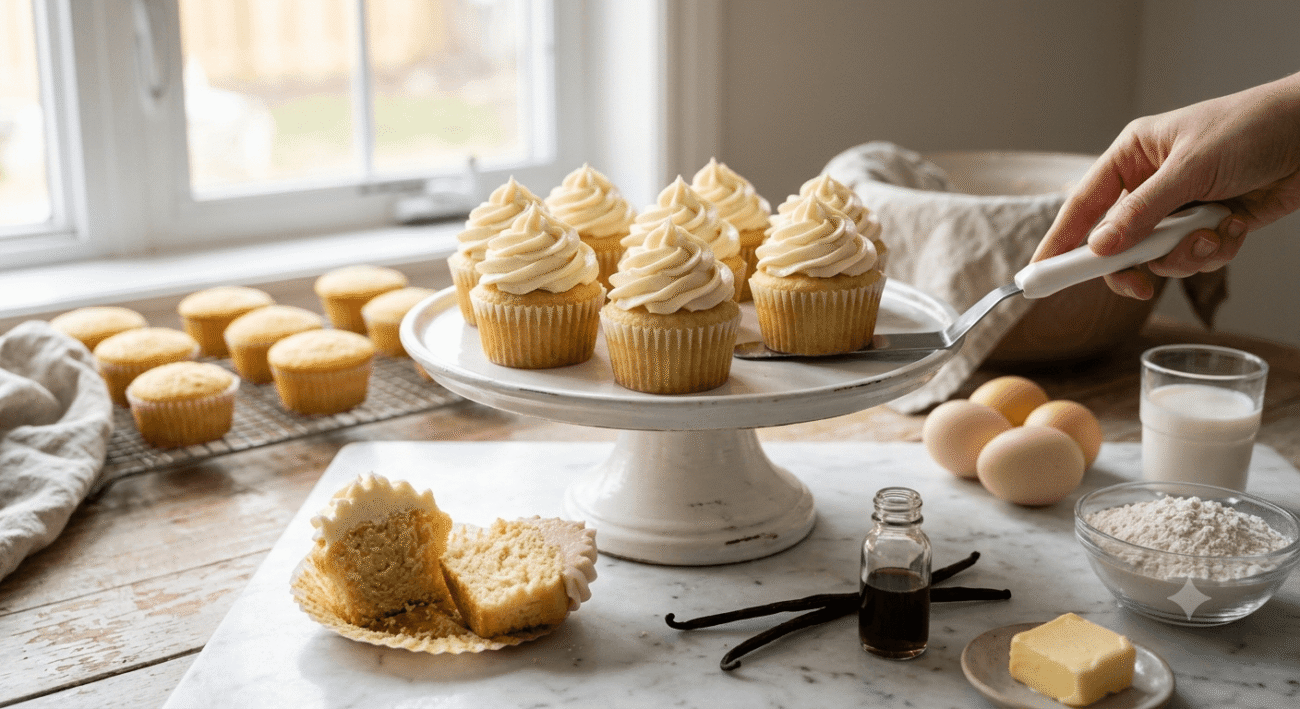
There’s a specific kind of disappointment that comes with biting into a vanilla cupcake that looks perfect but tastes dry, dense, or strangely flavorless. Vanilla is often treated as the “basic” option on a bakery menu, but a truly great vanilla cupcake the kind with a delicate crumb, a soft melt-in-your-mouth texture, and real vanilla flavor instead of a vague sweetness is honestly one of the harder things to get right in baking.
This recipe is built to solve that problem. It leans on a few specific techniques that make a noticeable difference in texture: creaming the butter properly, using both oil and butter for moisture, and adding yogurt for a subtle tang and extra softness. None of these steps are complicated, but together they produce a cupcake that stays soft for days, holds its shape under frosting, and tastes like actual vanilla rather than an afterthought.
Whether you’re baking for a birthday, a bake sale, or just because a batch of cupcakes sounds like a good Sunday afternoon project, this recipe is written to be beginner-friendly while still explaining the “why” behind each step, so you understand what’s happening in the bowl and not just what to do next.
Why This Recipe Produces Such a Soft Crumb
Before getting into the method, it helps to understand what makes this particular cupcake formula different from a basic vanilla recipe.
Butter and oil work together. Butter brings flavor and helps create structure when creamed with sugar, but it firms up when cool, which can make cupcakes feel slightly dense once they’ve cooled completely. Oil, on the other hand, stays liquid at room temperature, which keeps the crumb tender and moist even a day or two after baking. Using both means you get the flavor of butter with the lasting softness of oil.
Yogurt adds moisture and a gentle tang. Beyond just adding liquid to the batter, the acidity in yogurt reacts with the baking powder to give a slight lift, while also tenderizing the gluten in the flour, which is part of why these cupcakes come out so soft rather than chewy or tough.
Properly creamed butter builds real structure. Creaming butter and sugar together isn’t just about combining ingredients — it’s about beating tiny air pockets into the butter, which expand in the oven and give the cupcakes their light, fluffy rise. Rushing this step, or using butter that’s too cold or too melted, is one of the most common reasons cupcakes turn out dense.
Room-temperature ingredients matter more than most people think. Cold eggs or yogurt can cause the batter to seize up or curdle when mixed with butter, which affects how evenly everything blends and, ultimately, how the cupcakes rise and bake.
What You’ll Need
- 1½ cups (190g) all-purpose flour
- 1 cup (200g) granulated white sugar
- 1½ teaspoons baking powder
- ¼ teaspoon salt
- ½ cup (115g) unsalted butter, softened to room temperature
- ¼ cup (60ml) vegetable oil (or another neutral oil, like canola or sunflower)
- 2 large eggs, room temperature
- ⅓ cup (80g) plain yogurt, room temperature
- 2 teaspoons vanilla extract
This recipe yields about 11 to 12 standard-sized cupcakes. If you need a bigger batch, doubling every ingredient works cleanly without needing to adjust the baking time.
A note on substitutions: if you don’t have plain yogurt on hand, sour cream is a near-perfect substitute in equal quantity. Greek yogurt works too, though it’s worth thinning it slightly with a teaspoon of milk since it’s thicker than regular yogurt.
Step-by-Step Instructions
1. Preheat and prep
Preheat your oven to 325°F (165°C) and line a standard cupcake tin with paper liners. A slightly lower oven temperature than you might expect for cupcakes helps them bake more evenly without doming too aggressively or drying out at the edges.
2. Cream the butter and sugar
In a large mixing bowl, beat the softened butter and sugar together on medium speed for about 2 minutes, until the mixture turns pale and noticeably fluffier than when you started. The butter should be soft enough to give slightly when pressed, but not greasy or melted — that’s the consistency that holds air well when whipped.
This step is worth taking seriously rather than rushing through. Properly creamed butter and sugar is one of the main reasons this batter rises into a soft, light cupcake instead of a flat, dense one.
3. Add the eggs one at a time
Crack in one egg and beat for about 15 seconds until fully incorporated, then repeat with the second egg. Adding them separately, rather than both at once, helps the batter absorb more air with each addition, which contributes further to that soft, fluffy texture.
4. Mix in the oil, vanilla, and yogurt
Add the vegetable oil, vanilla extract, and yogurt to the bowl and mix until everything is well combined. At this stage, the batter may look slightly curdled or separated — that’s completely normal given the mix of fats and liquids, and it will smooth out once the dry ingredients are added.
5. Fold in the dry ingredients
Sift the flour, baking powder, and salt directly into the bowl (sifting helps avoid lumps and keeps the batter light). Mix on low speed just until the flour disappears into the batter — no longer. Overmixing at this stage develops the gluten in the flour too much, which is the most common reason homemade cupcakes turn out dense or slightly rubbery instead of soft and tender.
Finish by scraping down the sides and bottom of the bowl with a spatula and giving the batter a final gentle fold by hand to make sure there are no unmixed pockets of flour or butter hiding at the bottom.
6. Fill the cupcake liners
Using a spoon or a cookie scoop, fill each liner about three-quarters full — roughly a heaped tablespoon and a half of batter per cupcake. Filling them too high will cause the batter to overflow or dome unevenly as it bakes, while underfilling leads to flat, short cupcakes.
7. Bake
Bake at 325°F (165°C) for 15 to 18 minutes, until a toothpick or thin knife inserted into the center comes out clean, or with just a few moist crumbs attached (not wet batter). Every oven runs slightly differently, so start checking around the 15-minute mark.
8. Cool completely before frosting
Let the cupcakes cool in the tin for about 10 minutes, then transfer them to a wire rack to cool completely. This part takes patience, but frosting warm cupcakes will melt your buttercream and ruin the texture you worked to build. Give them at least 45 minutes to an hour before piping or spreading on frosting.
Tips for Cupcake Success
Measure your flour correctly. Scooping flour directly from the bag with a measuring cup tends to pack it down, resulting in more flour than the recipe intends and denser cupcakes as a result. Instead, spoon the flour into your measuring cup and level it off with a knife, or better yet, use a kitchen scale for the most accurate results.
Don’t skip room-temperature ingredients. Cold eggs or cold yogurt mixed into room-temperature butter can cause the fat to seize up in small clumps, which affects how evenly the batter comes together and how the cupcakes ultimately bake.
Resist the urge to overmix. Once the flour is added, mix only until you no longer see streaks of dry flour. A few small lumps are fine and will bake out; overmixing is the more common — and harder to fix — mistake.
Rotate your tray halfway through baking if your oven tends to bake unevenly, to help all the cupcakes rise and brown at a similar rate.
Variations to Try
- Brown butter vanilla cupcakes. Browning the butter before creaming it with sugar (then letting it cool back to a soft, spreadable consistency) adds a nutty, caramelized depth to the vanilla flavor.
- Vanilla bean cupcakes. Swap a teaspoon of the vanilla extract for the scraped seeds of a real vanilla bean or a teaspoon of vanilla bean paste for a more intense, speckled finish.
- Citrus-vanilla cupcakes. Add a tablespoon of finely grated lemon or orange zest to the batter along with the vanilla for a bright, slightly citrusy variation.
- Funfetti version. Fold in 2 to 3 tablespoons of rainbow sprinkles right at the end of mixing for a festive, kid-friendly twist — just avoid overmixing once they’re in, or the colors can bleed slightly into the batter.
Storage Tips
Unfrosted cupcakes keep well in an airtight container at room temperature for up to 3 days, thanks to the moisture from the oil and yogurt in the batter. Once frosted, store them in the refrigerator if your frosting contains butter or cream cheese, and let them sit out for 20 to 30 minutes before serving so the frosting softens back to a pleasant texture.
For longer storage, unfrosted cupcakes freeze beautifully for up to 2 months. Wrap them individually in plastic wrap, then place them in a freezer bag or airtight container. Thaw at room temperature before frosting.
Frequently Asked Questions
Why did my cupcakes sink in the middle? This is usually caused by underbaking, opening the oven door too early (which causes a sudden temperature drop), or too much leavening agent relative to the structure in the batter. Make sure your baking powder is fresh, avoid opening the oven for at least the first 12 minutes of baking, and always test doneness with a toothpick before removing the tray.
Can I use Greek yogurt instead of regular yogurt? Yes, though because Greek yogurt is thicker, it’s best to loosen it slightly with a teaspoon of milk before adding it to the batter, to keep the overall moisture level consistent with the original recipe.
Why is my batter curdled after adding the eggs and yogurt? This is a normal, temporary stage caused by combining fats (butter, oil) with liquids (eggs, yogurt) that haven’t fully emulsified yet. Once the dry ingredients are folded in, the batter comes together smoothly, so there’s no need to worry when you see this at this stage.
Can I make these cupcakes ahead of an event? Absolutely. Bake the cupcakes up to 2 days ahead and store them unfrosted at room temperature in an airtight container, then frost them the day of your event for the freshest presentation.
What frosting pairs best with vanilla cupcakes? Classic vanilla or chocolate buttercream are the most popular choices, but a lightly whipped cream cheese frosting also works beautifully if you want something less sweet.
Final Thoughts
Good vanilla cupcakes don’t need anything unusual or hard to find just a handful of pantry staples used with a bit of technique. The combination of properly creamed butter, a touch of oil for moisture, and yogurt for tenderness is what turns an ordinary vanilla batter into something genuinely soft, fluffy, and worth making again. Once you’ve baked a batch and tasted the difference for yourself, it’s easy to see why this simple method earns a permanent place in a home baker’s regular rotation.
